ORIONE DI BISTULFI SRL
Ambiente Lavoro
Trovaci a AMBIENTE LAVORO 2026
22
B11
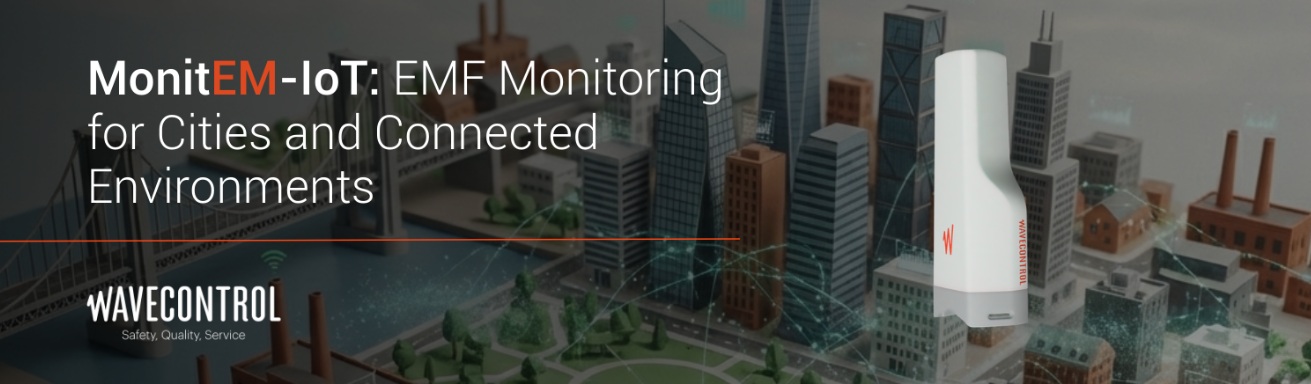
MonitEM-IoT: EMF Monitoring for Cities and Connected Environments
Estratto:
The Importance of Continuous EMF Monitoring
The presence of antennas, sensors, telecommunications networks and smart services increases the complexity of connected environments. As technologies such as 5G, IoT sensors and intelligent transport systems expand, public exposure to electromagnetic fields (EMF) requires continuous and accessible supervision.
To ensure EMF levels remain within safe boundaries, cities and organizations must consider the deployment of distributed monitoring networks that can:
Measure real-time exposure variations.
Detect unexpected increases with configurable alarms.
Record historical data for comparative analysis.
Provide transparency through public or administrative dashboards.
The ITU-T K.83 document, a global reference for long-term EMF measurements, defines exposure limits based on RMS values and equipment requirements such as autonomous operation, isotropic measurement, continuous logging, six- or thirty-minute averaging and environmental resistance
Contenuto:
Wireless technologies are part of daily life across urban, industrial and service environments, and with them comes the need to assess electromagnetic field exposure with precision and continuity. The deployment of 5G, IoT, smart grids and connected transport introduces constant variations in radiation levels, making it essential to use devices capable of measuring these fluctuations. This article explains how Wavecontrol’s MonitEM-IoT monitoring system works, the challenges it addresses and how it can be applied in sectors as diverse as smart cities, industry, defense and utilities